
Think about everything it takes to create content for your flagship event: months of planning, significant investment, executive time, customer participation, expert perspectives, creative development, technology, and production. You’ve already done the hardest and most expensive part: bringing all the right ingredients together to make killer content. The smart play is to extend that investment through additional content creation, capture, and atomization.
Look beyond the event agenda
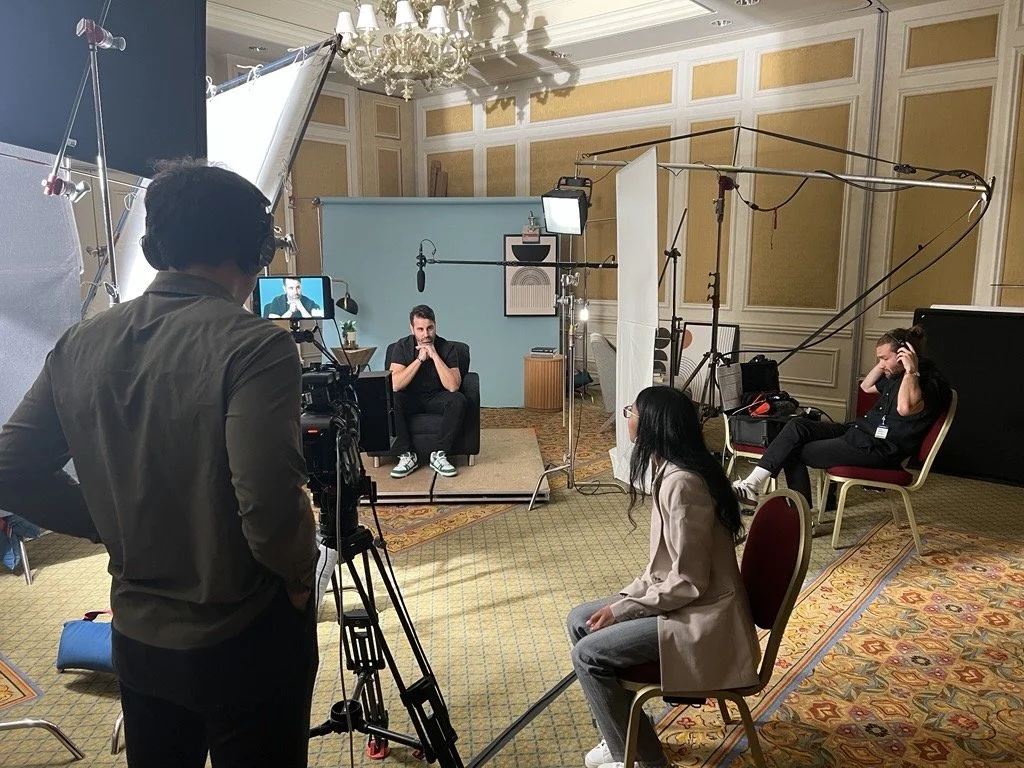
Your keynote is recorded. Your breakouts are available on demand. Maybe you’re livestreaming selected sessions. But what about everything else you could create while your executives, customers, partners, and industry experts are all in one place?
Think beyond the scheduled sessions:
Customer stories: Consider the customer who’s speaking on a panel. While they’re onsite, why not schedule an additional interview about their experience with your product or service? It’s an opportunity to create a richer customer story or case study.
Executive thought leadership: Your executive is already preparing for a keynote. Take advantage of their time onsite to capture a series of shorter conversations about topics relevant to your marketing campaigns over the coming months.
Expert perspectives: Product experts, partners, and industry leaders are all in one place. Capture demos, interviews, or educational content that would otherwise require separate production at another time.
Behind-the-scenes content: Don’t overlook what’s happening outside the sessions. Behind-the-scenes footage, informal conversations, and B-roll can become valuable material for social media, internal communications, and future event promotions.
A practical approach: Plan, Create + Capture, Activate
You don’t need to reinvent your event or build an entirely new content production operation. You just need to look at what’s already being planned through a different lens. Start with three steps:
PLAN for the content you need
Start with your organization’s marketing, sales, and communications priorities for the next 3-6 months.
What campaigns are coming up?
What case studies or customer stories do we need?
What questions are consistently coming up with prospects?
What thought leadership space do we want to own?
Identify the content you’ll need to support those priorities.
Now pull out your event agenda. Look at the sessions, speakers, and the people who will be there. Chances are, some of the content you need is already taking shape. Sort the opportunities into three categories:
Use as is: Identify sessions, presentations, and other scheduled programming that align with your needs and can be used in their existing form.
Needs editing: Identify existing programming that contains useful material but will need editing to become the content you need. Thigh might include extracting clips, combining segments, or adapting a presentation for a different audience.
Create additional content: Identify content you’ll need to capture outside the scheduled agenda. Think customer interviews, executive insights, expert conversations, behind-the-scenes footage, B-roll, or dedicated product demonstrations. These are opportunities to take advantage of having the right people and resources onsite.
CREATE + CAPTURE at the event
You’ve identified the content opportunities. Now make sure you can actually capture them.
Many of the resources you need will already be there. Think about how you can use the cameras, crews, production spaces, and technical support already planned for the event.
Some opportunities may require additional resources, especially for interviews or content outside the scheduled agenda. That’s where early coordination with your event production partners can make a difference. They can help identify what can be handled with existing resources and where additional support may be needed.
The goal is to make additional content creation part of your event production plan rather than trying to fit in once everyone is onsite.
ACTIVATE beyond the content
Now it’s time to turn what you’ve captured into the content you planned for.
Some assets will be ready as is. Others may need minor edits, like extracting clips or adding branded bumpers. And for those additional interviews, executive insights, and behind-the-scenes moments? You now have the raw materials to create polished stories and videos for your marketing, sales, and communications needs.
Here’s the real payoff. You’ve used your event to create content that can work for your organization all year, including content that might otherwise have required separate shoots, additional budgets, and weeks of coordination.
Or let’s face it, content that probably wouldn’t have been created at all.
And because you’ve tapped into the professional production already happening at the event, you’ve elevated the quality of that content too.
We’ve created the TPN Event-to-Content Playbook to help you get started. It includes a planning spreadsheet to help you:
Identify the content your organization needs
Organize opportunities into three categories: Use as is, needs editing, and create additional content
Identify existing production resources and select any additional capture or production services required
Plan how the content will be edited, packaged, and distributed to support your marketing, sales, and communications priorities