
This is part four of Beyond the Fan Zone, a field-study series exploring Seattle’s citywide World Cup experience through the eyes of a native Seattleite and TPN creative strategist, and what it can teach brands about creating experiences that bring people together.
On the day I set out to experience Seattle’s World Cup footprint, I covered a lot of ground across Downtown Seattle and its surrounding neighborhoods.
For anyone unfamiliar with the city, Downtown Seattle runs along Elliott Bay in a relatively compact north-to-south corridor. Seattle Center, home to the Space Needle and Climate Pledge Arena, anchors the northern end; Pioneer Square and the stadium district sit to the south, with SODO just beyond. The waterfront runs along the western edge, creating a natural route between many of those destinations.
The city’s World Cup activations stretched across that entire corridor.
I began in Belltown, a dense downtown neighborhood between Seattle Center and the central business district. From there, I walked downhill to the waterfront overlooking Elliott Bay, followed it south through Pioneer Square and continued toward the stadium district. After reaching the southernmost match-day activations, I took a shuttle north to Seattle Center. I then rode the monorail back into the heart of downtown and continued exploring Westlake Park and Pacific Place.
What surprised me was how easy it felt.
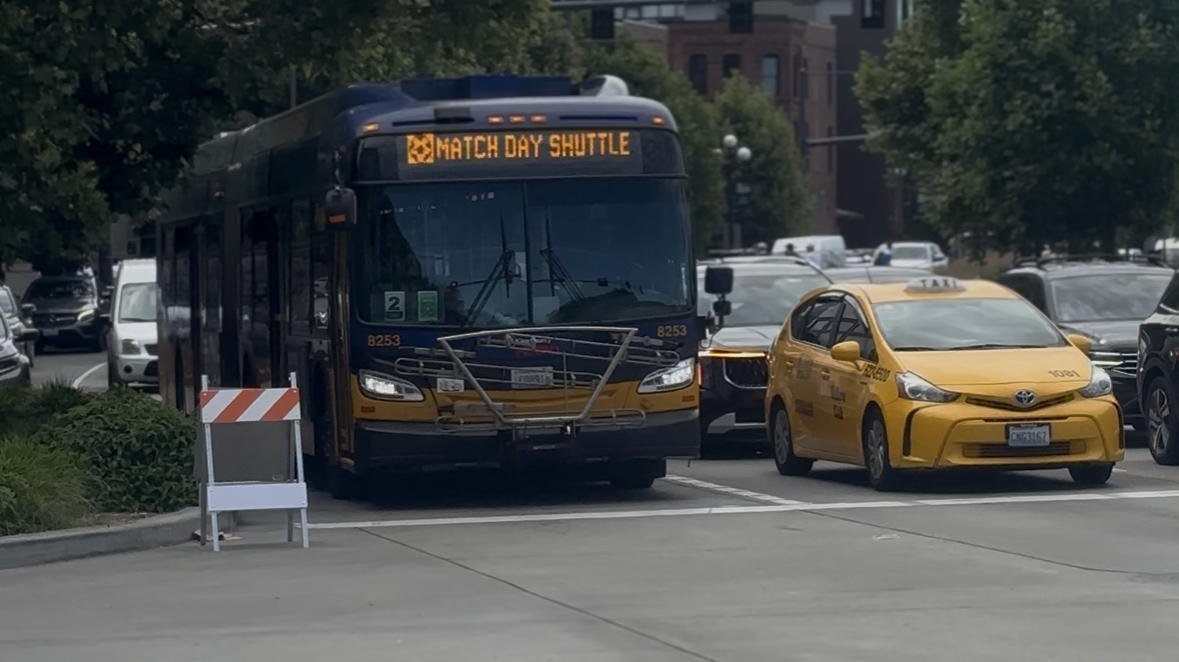
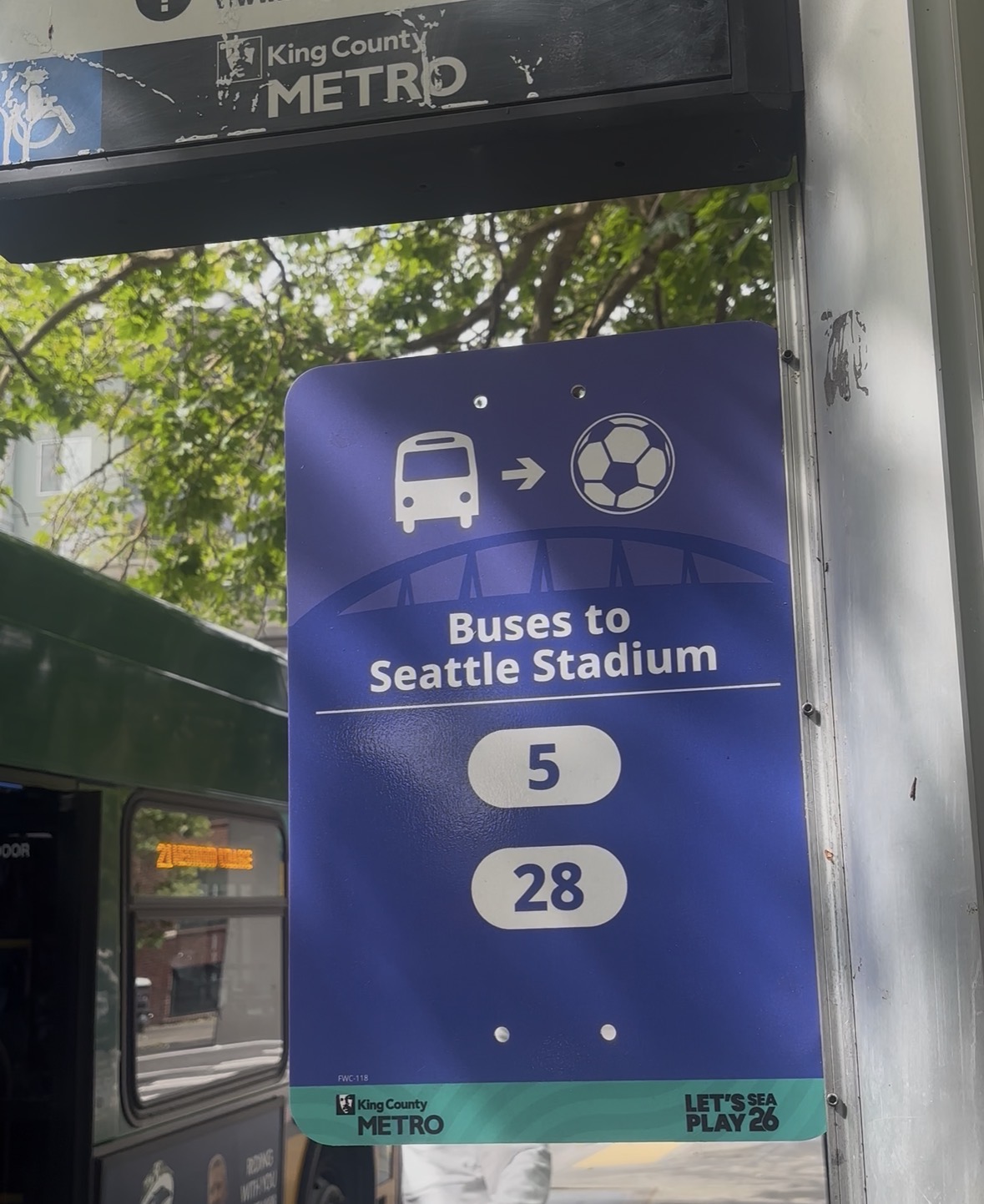
The shuttles were clearly marked. Fans were walking, riding bikes and grabbing scooters. The monorail was busy but straightforward. It runs along a single route with only two stations, connecting Seattle Center with Westlake in the center of downtown. Strategic Lime corrals held large groups of bikes, scooters and gliders in designated locations, making them easy to find without allowing them to consume every available sidewalk.
That ease of movement was essential because Seattle’s fan celebration was not contained within a single campus or venue. Its four primary zones were distributed along a roughly three-mile corridor, from Seattle Center in the north through downtown and the waterfront to Victory Hall in SODO. Free match-day and waterfront shuttles helped connect Seattle Center, Waterfront Park, Pioneer Square, the stadiums and the Chinatown–International District.
The transportation system did more than solve a logistical problem. It made the city feel accessible.
For an experience strategist, that raises a deceptively simple question: Where does the experience actually begin?
It does not begin when someone reaches registration, enters a ballroom or scans a ticket. It begins when they decide to go.
Can they understand where to start? Do they know how long the journey will take? Do the directions and communications lower their anxiety or create more of it? Is the route accessible? Can they find food, shade, a restroom or a place to sit along the way? If the program spans multiple venues, does moving between them feel intuitive or like a scavenger hunt?
Every answer shapes how the attendee arrives emotionally.
The same is true for corporate events, customer conferences and multi-venue programs. A beautifully designed keynote cannot fully recover an attendee journey that began with a confusing shuttle queue, conflicting directions or a 25-minute walk no one mentioned, sometimes in the wrong direction.
The moments between programmed moments are also where audiences make decisions. They decide whether to visit the next activation, skip a session, leave early or keep exploring. They compare notes. They post content. They get tired. They need coffee. They need to charge their phones. They get hungry. They need a break. They need more coffee. They notice whether anyone thought about what they would need.
At TPN, audience-journey mapping includes those in-between moments because they are part of the experience. Transportation, wayfinding, mobile communications, staffing and contingency planning all influence whether a program feels like one connected system.
Seattle handled the physical connection impressively. Multiple modes of transportation, clear connections between destinations and a mix of walking, shuttles, transit, bikes and scooters gave people different ways to move through the city.
There was also an intangible benefit: movement spread the energy beyond the official celebration sites and into the city as a whole.
Jerseys, flags, painted faces and different languages appeared everywhere. Fans were not teleported from one branded footprint to another; they carried the atmosphere through the city with them. The routes became part of how Seattle experienced the tournament.
That is the larger lesson for event leaders: The audience journey is not empty space between your important moments. It is where those moments either begin to connect or begin to fall apart.
Seattle’s transportation connected the destinations physically. Later in this series, I will return to the creative opportunity to connect them emotionally, too.
The match-day shuttle took me north to Seattle Center, where one fan zone succeeded by giving very different audiences equally compelling ways to participate. In the next installment, I’ll explore how Seattle Center drew on its long history of public programming to create an experience for the whole city.


