
This is part six of Beyond the Fan Zone, a field-study series exploring Seattle’s citywide World Cup experience through the eyes of a native Seattleite and TPN creative strategist, and what it can teach brands about creating experiences that bring people together.
Weeks before the World Cup, Pacific Place was not where I went to find a crowd.
Located in the heart of Downtown Seattle, just one block from the Westlake transit hub, Pacific Place was once one of the city’s premier shopping destinations. Its five-story atrium, restaurants and movie theater made it a natural gathering place within walking distance of Pike Place Market, the waterfront and Seattle’s central business district. But like many downtown retail spaces, it struggled to recover from shifts that began before 2020 and accelerated afterward. In recent years, I went there to park my car, see a movie or eat at Din Tai Fung. Much of the rest of the building often felt quiet and transitional.
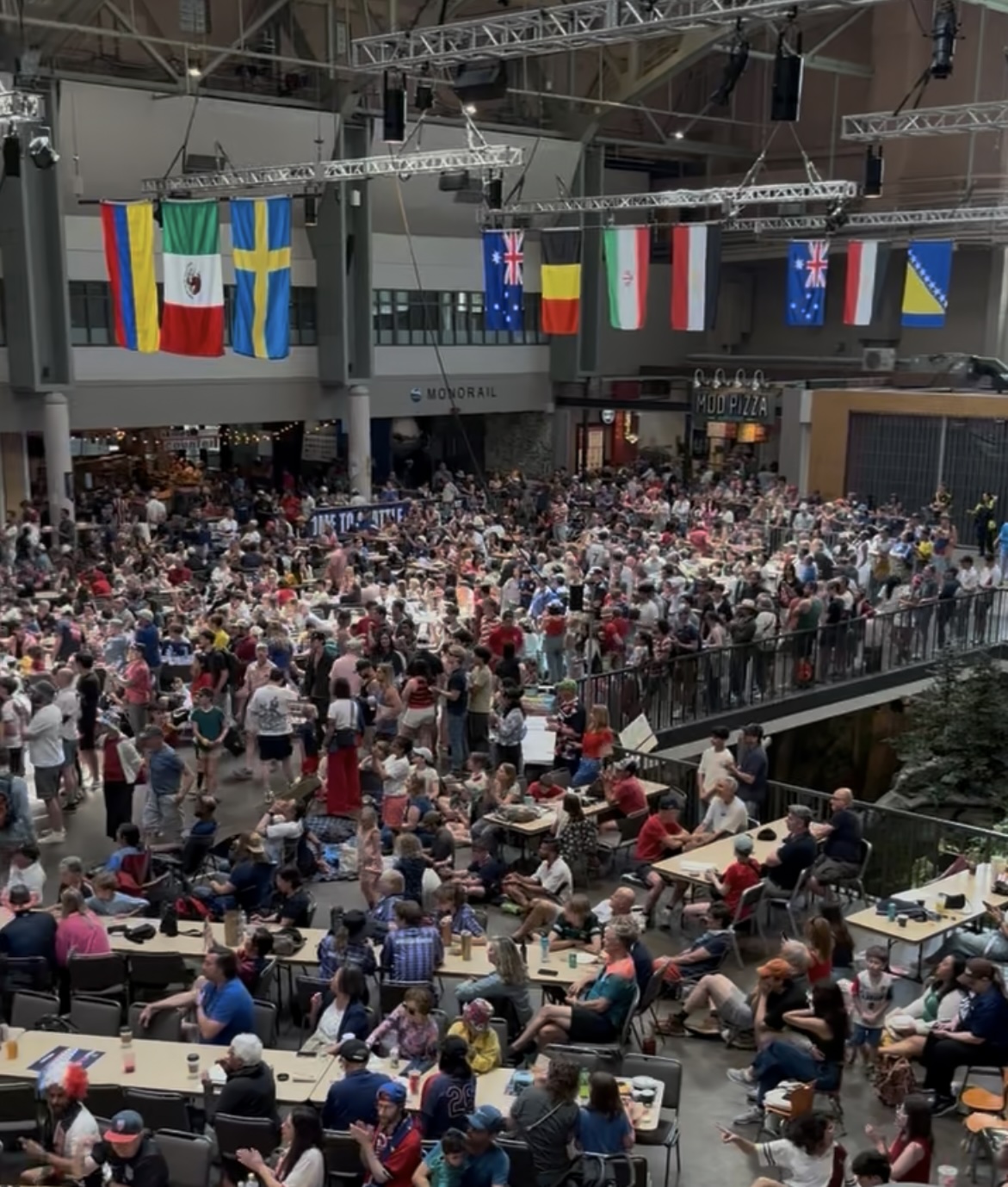
For the World Cup, he 27,000 square feet of Pacific Place transformed into Seattle Soccer House, with six themed zones anchored by a 70-by-40-foot screen visible across four levels. The free experience layered match viewing with interactive activations, hospitality, family programming and retail. It was designed as an all-ages celebration of global soccer and Pacific Northwest culture.
The location mattered. Pacific Place sits at the center of the city’s retail and transit core, but in recent years it had not always felt central to the life of Downtown. The World Cup temporarily changed that.
When I approached during the U.S.–Australia match and a security guard told me the building was at capacity, I laughed to myself. There is no freaking way Pacific Place is at capacity.
Being a local, I knew another entrance. I walked around the block and got inside.
He was not lying. The atrium was packed, along with multiple floors. When the elevator opened on the second level, staff told us there was no room to step off. The main activation had a wait of hours, and I still had several other stops to cover, so I continued up to the fourth floor and found a place near Din Tai Fung. From there, I could look down and see thousands of people gathered around a giant screen stretching several stories through the center of the building.
That is where I noticed something useful: the restaurant’s televisions were a few seconds ahead of the main screen. After a couple of close calls, I realized I could watch the bar television for the first reaction, then move ten feet to the railing and be ready when the larger crowd caught up.
When the U.S. scored, the entire building erupted. It was deafening. Thousands of people across several levels reacted like one body. For a moment, a place that had felt nearly dormant became one of the most emotionally charged rooms in Seattle.
The strategic question is bigger than whether the activation drew a crowd: What happens when temporary programming changes how people perceive a permanent place?
Experiences can help audiences see new potential in buildings they have stopped noticing. An empty retail floor can become a fan house. A warehouse can become a launch environment. A parking lot can become a community gathering place. A corporate campus can become a festival. But transformation is not only visual. It comes from giving people a compelling reason to be there together.
While the giant screen and programming mattered, the real change came from thousands of people investing their attention and emotion in the same place at the same time. For brands and property owners, that creates both an opportunity and a challenge. A temporary event can generate attention, alter perception and introduce a space to a new audience. But if there is no plan for what happens next, the energy disappears as quickly as the scenic elements.
At TPN, we think about the before, during and after, not only the days an experience is open. Who are we inviting into the space? What new behavior are we trying to create? What content, community, data or programming can continue after the live moment? How can a temporary experience support a longer-term business or placemaking goal?
Pacific Place proved that people were willing to return when there was a reason. The bigger question is whether the building and the city can convert that temporary momentum into a lasting relationship.
A powerful experience can change what people believe a place is for. A strategic one also considers what will bring them back.
By this point in my day, Seattle had shown me several strong destinations. But I was also starting to notice what was missing between them: one creative thread that made the full citywide program feel like a single experience.
Read Beyond the Fan Zone: Episode 7


