
This is part seven of Beyond the Fan Zone, a field-study series exploring Seattle’s citywide World Cup experience through the eyes of a native Seattleite and TPN creative strategist, and what it can teach brands about creating experiences that bring people together.
Seattle made an interesting choice for the World Cup. Instead of concentrating its public programming in one central fan zone, it distributed the experience across the city.
For readers who have never been here, Downtown Seattle runs along a relatively compact north-to-south corridor between Elliott Bay and the city’s central hills. Seattle Center and the Space Needle anchor the northern end. Pacific Place sits in the Downtown retail core. Waterfront Park follows Elliott Bay to the west. Farther south, Pioneer Square leads into the stadium district and SODO.
The city’s four official public destinations, Seattle Center, Pacific Place, Waterfront Park and Pioneer Square, were spread across that corridor. The stadium district and surrounding neighborhoods added their own supporter culture, hospitality and match-day energy. The official celebration sites were free and connected by transit, shuttles and walkable routes.
The variety was a strength.
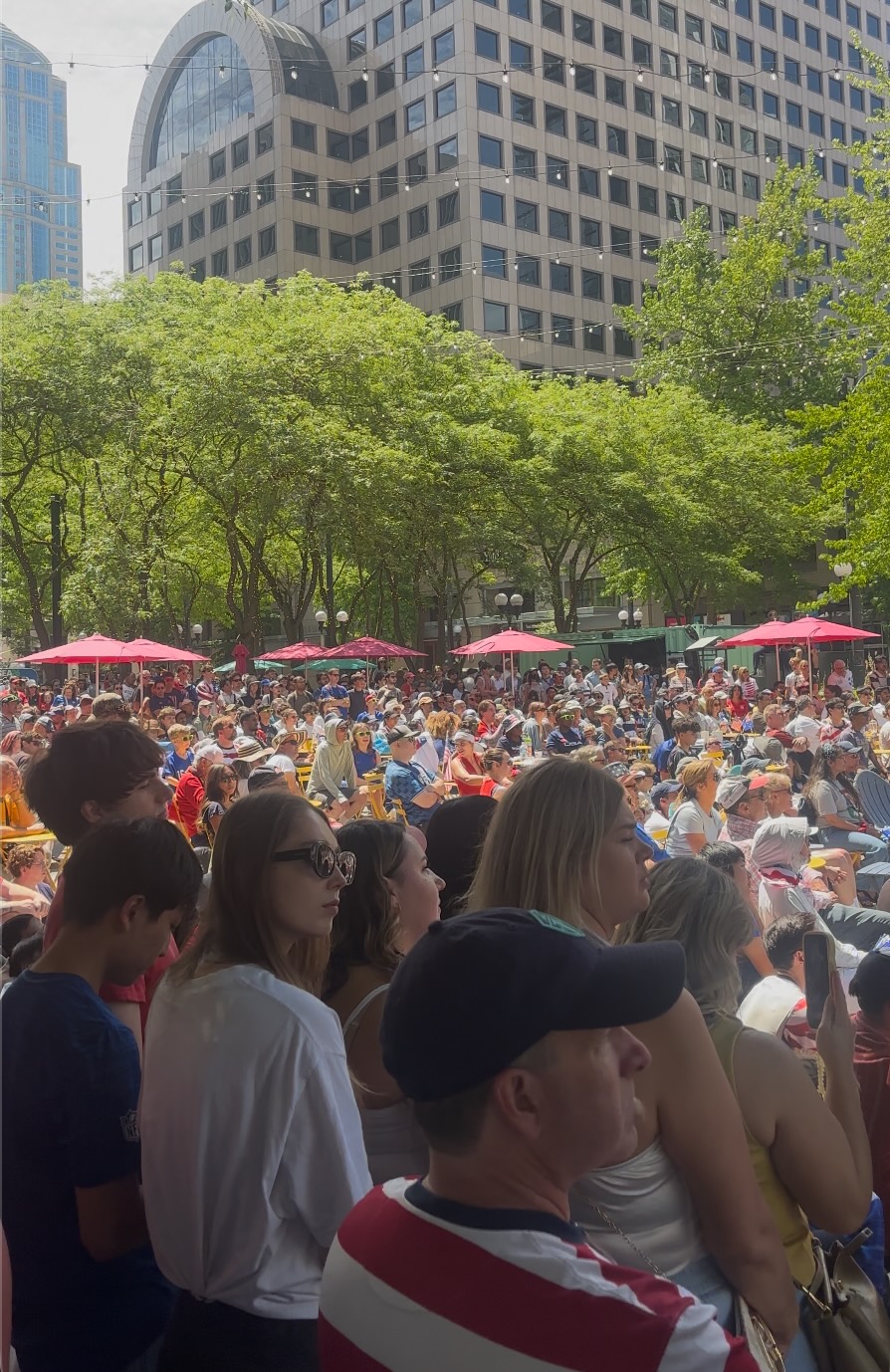
The waterfront felt communal and connected to Seattle’s soccer history. Pioneer Square, the traditional gathering place for Sounders supporters before matches, was loud and driven by ritual. Seattle Center offered a festival environment beneath the Space Needle with multiple ways to participate. Pacific Place showed how the right programming could bring new energy to a quiet Downtown retail space.
Each location worked on its own.
What I did not always feel was the connection between them.
The city made it easy to move from place to place. Shuttles connected the northern and southern ends of the footprint. The monorail linked Seattle Center with Westlake in the middle of Downtown. Public transit, walking routes, bikes and scooters filled in the rest.
Physically, the experience was connected.
Creatively, it sometimes felt like a collection of separate destinations.
Once I left one location, there was not much carrying its story into the next. I could be part of the waterfront celebration without knowing what was happening at Seattle Center. Someone watching from Pacific Place had little sense of the supporter rituals filling Pioneer Square or the atmosphere building near the stadium.
That same challenge shows up in large events. A company may have a keynote, expo, customer dinner, partner activation, digital platform and off-site experience, all individually strong. But if the audience cannot see or feel the relationship between them, they are still separate experiences.
The strategic question is: What makes multiple destinations feel like parts of the same experience?
My first instinct for Seattle was live video portals shaped like soccer balls.
I would have placed one at the waterfront, one in Pioneer Square, one at Seattle Center, one at Pacific Place and one near the stadium. Fans in each location could see and react to one another across the city. The network could even have extended roughly 140 miles north to Vancouver, connecting two Pacific Northwest host cities across the U.S.–Canadian border.
Yes, there would need to be a broadcast delay. Humans occasionally do dumb things when they know they are on camera. But we have technology for that.
The point is not that every multi-venue event needs giant soccer-ball portals, (although I would still very much like someone to build them because that would be cool.) The point is that people need something that helps them see and feel the larger experience around them.
That could be live content moving between locations. It could be a citywide challenge, a collectible, a recurring character, consistent wayfinding or a ritual repeated across every venue. It could live in a mobile experience, onstage, in the streets or across social content.
Whatever the form, it should do at least one of three things:
- Help people understand where they are within the larger experience.
- Give them a reason to explore more of it.
- Let them feel the presence of people participating elsewhere.
This is where creative strategy matters. Before production begins, it defines the central idea, the role of each touchpoint and what connects them.
Production makes that idea work in the real world through technology, content, show flow, staffing, transportation, accessibility, contingency planning and the details that determine whether the experience works for an actual audience.
At TPN, we often work across this kind of complexity. The goal is not to make every location look or feel the same. Each should have its own purpose and personality. The job is to make the relationship between them clear.
A strong destination gives people a reason to arrive. A connected experience helps them understand why the next destination matters, too.
There was, however, one moment that reached beyond the individual zones and gave each Seattle match day a shared emotional ending. In the final installment, I’ll look up toward a drone show beside the Space Needle and explore why great experiences deserve a closing ritual.
Read Beyond the Fan Zone: Episode 8


