
This is the final installment of Beyond the Fan Zone, a field-study series exploring Seattle’s citywide World Cup experience through the eyes of a native Seattleite and TPN creative strategist, and what it can teach brands about creating experiences that bring people together.
After every World Cup match hosted in Seattle, the final whistle was not quite the end.
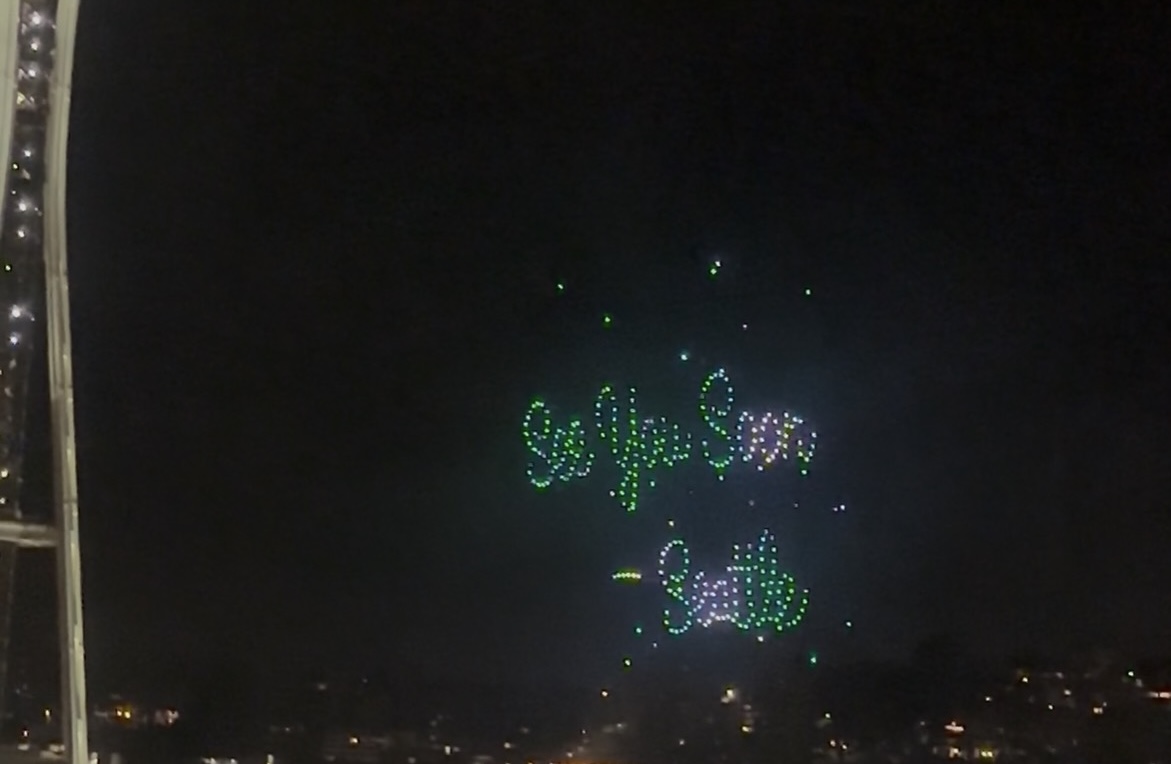
Later that night, hundreds of drones lifted into the sky beside the Space Needle. They recreated the competing countries’ flags, displayed the final score and turned one of Seattle’s most recognizable landmarks into the closing scene of match day.
The Space Needle stands at Seattle Center, just north of downtown. Built for the 1962 World’s Fair, it remains the defining point in the city’s skyline, visible from neighborhoods well beyond the official fan celebration below it. That made it an effective backdrop for an experience intended to reach the whole city.
I watched the shows from my apartment a few blocks away.
They felt like the ending of an American summer montage, the kind you might see in an Old Navy or Gap campaign. I could picture families sitting on the lawn around Seattle Center’s International Fountain after a full day of exploring the city. Everyone looked up and knew this was how Seattle’s match day ended.
The shows were patriotic without feeling overproduced. They were cinematic, wholesome and genuinely sweet.
And when the drones spelled out “See You Soon Seattle,” it felt like a little love letter from the city to everyone who had gathered here.
The strategic question behind that moment is one event teams do not ask often enough: What should people feel when the experience is over?
Events are very good at ending operationally. The speaker says thank you. The walk-out music starts. The house lights come up. The bars close. The last shuttle leaves. Everyone knows the program is finished.
But an operational ending and an emotional ending are not the same thing.
An emotional ending gives people one final shared experience before they scatter. It reinforces the larger story and leaves them with a feeling they can carry with them.
Seattle’s drone shows did exactly that.
Visit Seattle created six 12-minute shows using 400 drones, one after each match hosted in the city. The displays incorporated the final score, team flags and imagery inspired by Seattle, all set against the Space Needle. The scale made the moment spectacular. The location made it communal.
Seattle Center was the northernmost anchor of the city’s distributed celebration, but the show was not confined to the fan zone below it. You did not need a match ticket or have to be inside an official celebration site. You could gather at Seattle Center, watch from another neighborhood or, like me, look out your apartment window.
For a citywide experience with several distinct destinations, the sky became the one screen everyone could share.
It also turned the final score into more than information. Everyone already knew who had won. What mattered was seeing that result reflected through Seattle’s identity.
This is where a closing moment can do more than signal that an event is over.
It can bring the central idea full circle. It can recognize what the audience experienced together. It can create one final content moment or provide a bridge from the live event into whatever comes next.
And it does not require 400 drones.
At a customer conference, the ending might be a final story that connects back to the opening keynote. At an employee event, it could be a collective commitment made visible in the room. At a product launch, it might be the first moment the audience gets to take the idea into its own hands. At a multi-city program, it could be a live handoff to the next destination.
The format can be intimate or enormous. What matters is that it feels intentional and connected to the experience.
Closing moments also deserve the same practical thinking as any other part of the attendee journey. Can everyone access it? Will people know when and where it is happening? Does it work for someone watching remotely? What happens if weather, timing or technology changes the plan? Can the moment reach people who experience it later through content?
At TPN, we think about an experience as an arc, not a collection of agenda items that ends when the run of show reaches its last line. Strategy defines what the audience should carry away. Creative gives that feeling a form. Production, technology and operations make it possible. Content helps it reach beyond the live moment.
The ending is not an add-on. It is the last chance to reinforce what the experience was about.
That feels like the right place to close this series, too.
I began the World Cup as a solid bandwagon fan. Then the matches became part of my day. I learned the teams, personalities, statistics and stories. I watched from a floating barge on Elliott Bay, walked through Seattle’s oldest neighborhood toward the stadium, followed the energy north to Seattle Center and stood inside a downtown mall as thousands of people erupted together.
Each stop taught me something different about how experiences create connection:
- The best brand activations support the reason people gathered instead of competing with it.
- Local rituals are creative assets because people already care about them.
- The attendee journey begins long before the entrance.
- Shared experiences are more inclusive when people can participate in different ways.
- Temporary programming can change what people believe a place is capable of becoming.
- Multiple destinations need a connection before they become one journey.A
- And great experiences deserve an ending designed with as much care as the beginning.
For a few weeks, people from across the state and around the world filled Seattle’s streets, learned one another’s songs, cheered for their countries and looked up at the same sky. Then Seattle said, “See you soon.”
Not goodbye. An invitation to come back.
That is what a strong ending does. It does not simply tell people the experience is over. It gives them one final feeling worth carrying with them.


