
This is part five of Beyond the Fan Zone, a field-study series exploring Seattle’s citywide World Cup experience through the eyes of a native Seattleite and TPN creative strategist and what it can teach brands about creating experiences that bring people together.
I live only a few blocks from Seattle Center, so I did not need to be standing inside the official fan celebration to know when a match was on.
I could hear it from my apartment.
With the windows open, the roar of the outdoor crowd traveled through the neighborhood. I knew when every shot was taken and when one found the back of the net. Inside the celebration, that same energy was spread across two very different viewing environments.
Outside, the atmosphere felt younger, louder and more like a party. Large screens, DJs, food trucks and beer gardens gave the Mural Lawn, just beneath the iconic Space Needle, a festival energy.
But less than 50 yards away inside the Armory, families with little kids, older fans and anyone looking for relief from the heat had another way to participate. The indoor environment was calmer, but it still held the shared tension and release of watching a match together. Seattle Center offered daily indoor viewing, with larger outdoor watch parties on select match days. The wider program combined viewing, music, movement, art, culture and community across the entire campus.
Neither experience was the “correct” one. That was the point.
The strategic question at Seattle Center was “How can one event serve people who want different levels of energy, comfort and participation?”
Event teams often define an audience by title, industry or demographic. But two people with nearly identical profiles may want completely different things once they arrive. One wants to be at the center of the crowd. Another needs a quieter place to reset. One wants to stay for hours. Another wants to dip in between other plans. Families, older attendees, neurodivergent guests, superfans and casual observers may all be interested in the same content without wanting the same physical experience.
Designing for those differences does not require building a separate event for every person. It requires meaningful choices.
At Seattle Center, people could move between indoors and outdoors, intensity and relief, programmed participation and casual observation. The experience remained cohesive because the match was the common anchor.
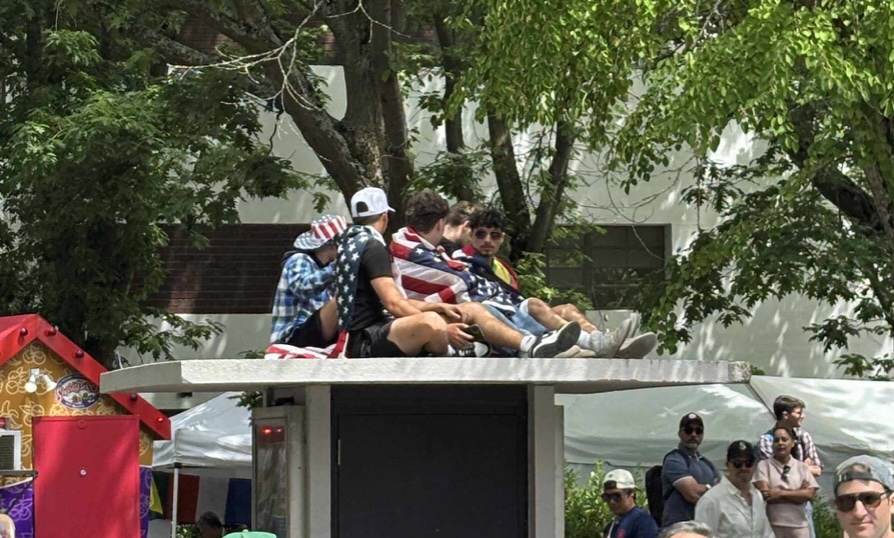
One of my favorite images from the day was a group of teenage boys draped in American flags sitting on top of a structure so they could see the screen. You could interpret that as an overflow issue. I saw something more endearing: teenagers completely focused on the match, out in the community and watching together instead of being home on their phones.
The audience was adapting the space to create the experience it wanted.
That kind of organic participation is useful feedback. Where are people lingering even though there is no seating? Which route are they taking instead of the one on the map? Where do they naturally gather, recharge or take photos? What behavior is the design encouraging, and what behavior is the audience inventing for itself?
At TPN, we use those questions to move beyond generic audience personas and design for real behavior. That can mean multiple content formats, different degrees of participation, intentional quiet zones, flexible seating, accessible sightlines or places to enter and exit without feeling disruptive.
Audience choice is not about lowering the energy of an experience. It is about making that energy available to more people.
Seattle Center also reinforced something I felt throughout the tournament. Seattle can be sleepy. It can be introverted. It even has a whole social phenomenon named for how difficult it can be to connect here: the Seattle Freeze.
For a few weeks, the World Cup gave the city permission to come outside.
A shared experience becomes more inclusive when people do not have to participate in exactly the same way to feel part of it.
My next stop was Pacific Place, where the right programming did more than attract an audience. It temporarily changed what an entire building felt capable of becoming.
Read Beyond the Fan Zone: Episode 6


